
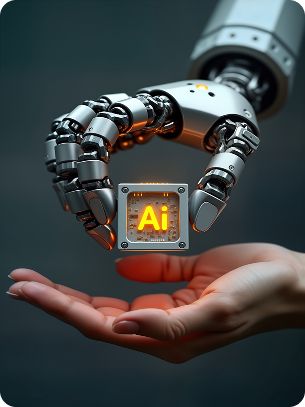
Artificial Intelligence Explained: How AI is Changing the World
Artificial Intelligence Explained: How AI is Changing the World
Understanding Artificial Intelligence explained in 2026 is essential as AI transforms industries, healthcare, education, finance, and daily life. AI enables machines to perform tasks that usually require human intelligence, including reasoning, learning, problem-solving, and language understanding. This guide covers AI fundamentals, real-world applications, benefits, challenges, ethical considerations, and future trends, offering a comprehensive resource for students, professionals, and tech enthusiasts.
What is Artificial Intelligence Explained?
Artificial Intelligence involves designing machines and software to perform intelligent tasks. It includes subfields like machine learning, natural language processing, computer vision, and robotics. AI can analyze large datasets, identify patterns, and automate decisions. According to IBM’s official AI overview, these technologies replicate human reasoning and improve efficiency across sectors. Understanding Artificial Intelligence explained helps organizations adopt innovative strategies and remain competitive.
Applications of Artificial Intelligence Explained
AI has widespread applications across multiple industries:
- Healthcare: Disease diagnosis, predictive analytics, robotic surgeries, and personalized treatment plans. As highlighted by Nature Journal, AI improves patient outcomes and medical efficiency.
- Finance: Fraud detection, automated trading, risk management, and chatbots for customer support.
- Education: Personalized learning, grading automation, adaptive learning platforms, and smart assessment tools.
- Transportation: Autonomous vehicles, route optimization, and traffic management systems.
- Daily Life: Virtual assistants, recommendation engines, smart home devices, and language translation.
Benefits of Artificial Intelligence Explained
- Increases operational efficiency and productivity
- Supports data-driven decision-making
- Automates repetitive tasks and reduces errors
- Enhances real-time analytics and predictive capabilities
- Improves personalized services and customer experience
Challenges of Artificial Intelligence Explained
Despite its benefits, AI presents challenges such as:
- Data privacy and security concerns
- Potential job displacement from automation
- Algorithmic bias and fairness issues
- Complexity and high deployment costs
- Ethical and regulatory challenges, addressed in part by the UNESCO AI Ethics Framework
Getting Started with Artificial Intelligence Explained
For beginners interested in AI:
- Learn programming languages like Python or R
- Understand machine learning and deep learning fundamentals
- Experiment with AI frameworks such as TensorFlow and PyTorch
- Join online courses, workshops, or coding bootcamps
- Collaborate on real AI projects to gain practical experience
Future Trends in Artificial Intelligence Explained
AI continues evolving rapidly. Key future trends include:
- AI in healthcare and precision medicine
- Enhanced autonomous transportation systems
- Integration with Internet of Things for smart cities
- Advanced conversational AI and natural language understanding
- Ethical AI frameworks and global regulation standards
Frequently Asked Questions (FAQ)
What is Artificial Intelligence?
Artificial Intelligence is the development of computer systems capable of performing tasks that typically require human intelligence.
Where is AI used?
AI is used across healthcare, finance, education, transportation, and consumer technologies to enhance efficiency and automation.
Can AI replace humans?
AI can automate repetitive tasks but cannot replace human creativity, empathy, or judgment entirely.
How do I start learning AI?
Begin by learning programming, exploring machine learning concepts, and experimenting with AI tools and platforms.
Conclusion
Understanding Artificial Intelligence explained highlights how AI transforms industries, drives productivity, and opens new opportunities. Awareness of applications, benefits, challenges, and ethics enables individuals and organizations to adopt AI responsibly. Continuous learning and proactive adoption ensure AI positively impacts society. Stay informed, upskill, and embrace AI technologies to thrive in the digital future.
For more insights on practical applications, visit our internal reference page.